The Central American Games with Rodrigo Rivas

We’re excited to catch up once again this season with Rodrigo Rivas, part of the coaching staff for the Nicaraguan men’s and women’s national teams. He sat down with us to talk about his recent experience on the international stage, reflecting on the challenges, growth, and milestones achieved during the tournament—plus what’s coming next for both squads.
Can you explain what the competition was and what teams did you follow through it ?

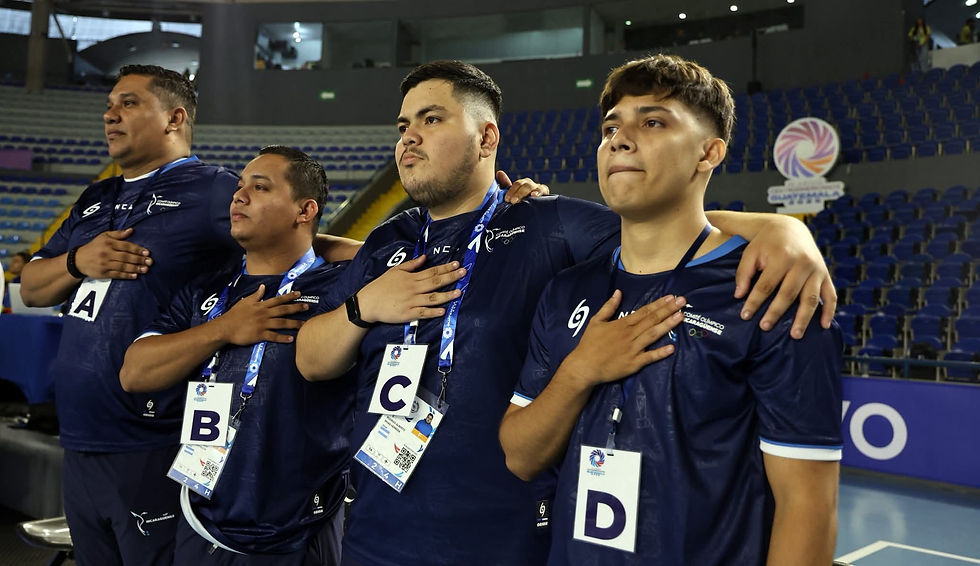
The competition was the 2025 Central American Games in Guatemala, an event that officially marks the start of the Olympic cycle for our region. During the tournament, I accompanied and followed the Nicaraguan men’s and women’s national teams, forming part of the coaching staff for both squads.
What was the outcome of the tournament for your teams ?
The result was relatively good. With the men’s team, we won the silver medal, while the women’s team earned the bronze medal. In addition, we achieved a very important goal: qualifying for the Central American and Caribbean Games, which will be held in Santo Domingo, Dominican Republic, in 2026.

What did you learn from this experience? What tools or stats were useful throughout the competition?

I learned a great deal. As you take part in higher-level competitions, each tournament offers new lessons and experiences, both in reading the game and in decision-making.
The statistics I used the most were shot maps for the men’s team, since as a goalkeeping coach they allow me to identify patterns in opposing players and better prepare our goalkeepers. Additionally, more generally with both teams, I constantly reviewed the efficiency of our own players, which helped me determine when they should stay on the court and when they needed rest.
What is/are the next step(s) for you and your teams ?
In the short term, the main objective is to continue working with both teams ahead of the Central American and Caribbean Games, which will take place in about seven months. This involves maintaining consistent preparation and ensuring that all athletes arrive in optimal condition.
Personally, my next step is to continue contributing in the area of statistical analysis, using Steazzi as my main tool, as it has been essential for my ongoing growth and for helping improve the performance of our national teams.
A big thank-you to Rodrigo for sharing his time and insights with us. We can’t wait to follow the teams at the upcoming Central American and Caribbean Games and see how this journey continues to unfold.
Check out Rodrigo’s first article here: https://www.steazzi-handball.com/post/rodrigo-rivas-handball-in-nicaragua